 Light layers
Summer walk
The 1-hour footbridge walk
- Base
- Thin wool layer
- Top
- Fleece and rain shell
- Feet
- Trainers with tread
Guides
Language
EnglishCurrency
US dollar · $Prices on GetYourGuide appear in your chosen currency.
Guide · Clothing
A lava tube is cold, damp and uneven whatever the weather outside. A few sensible layers and the right shoes make the difference between shivering through the hour and enjoying it.
Editorial team, lavacavetouriceland.comUpdated October 25, 20266 min read18 sources
Pack this
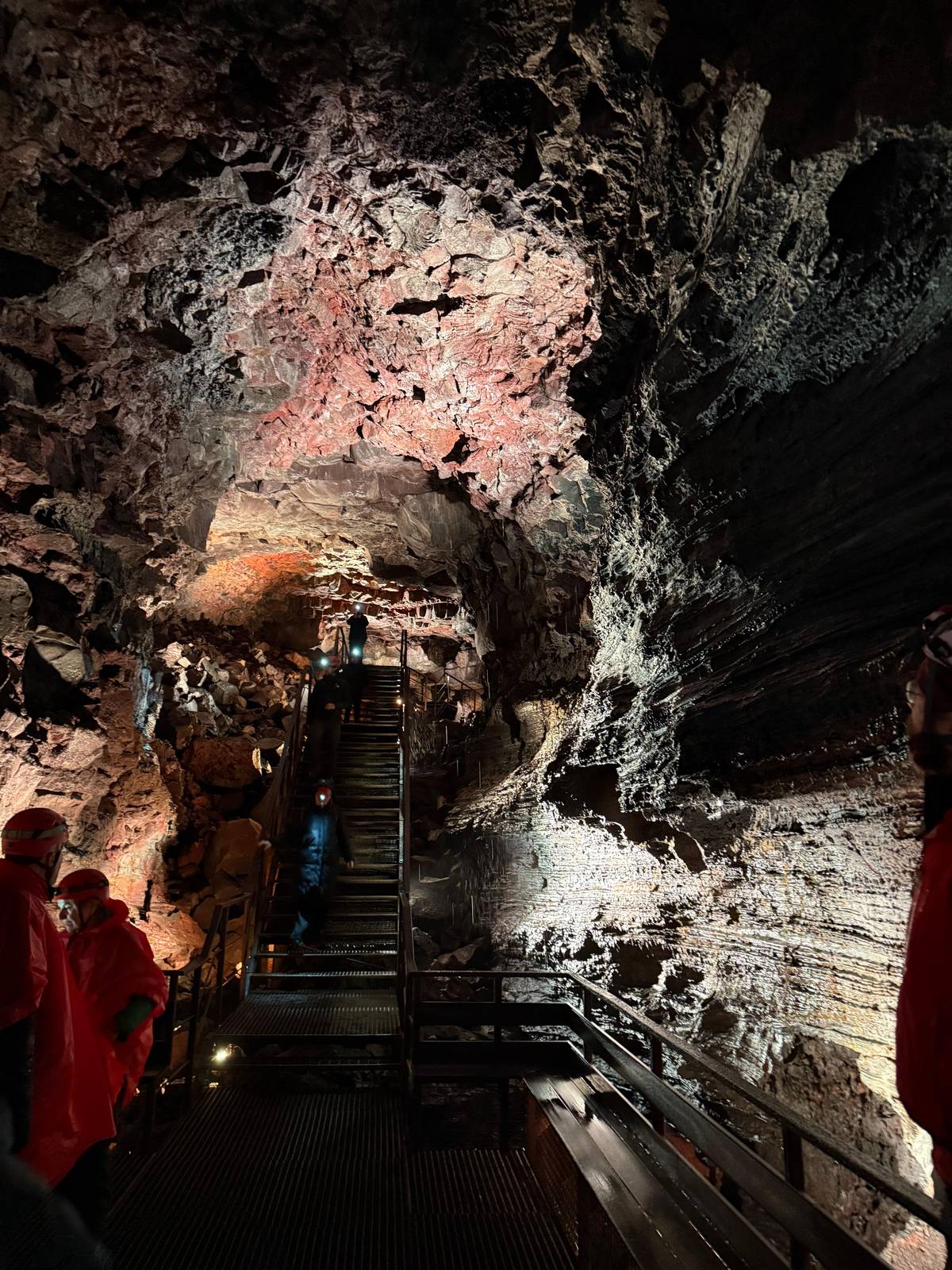
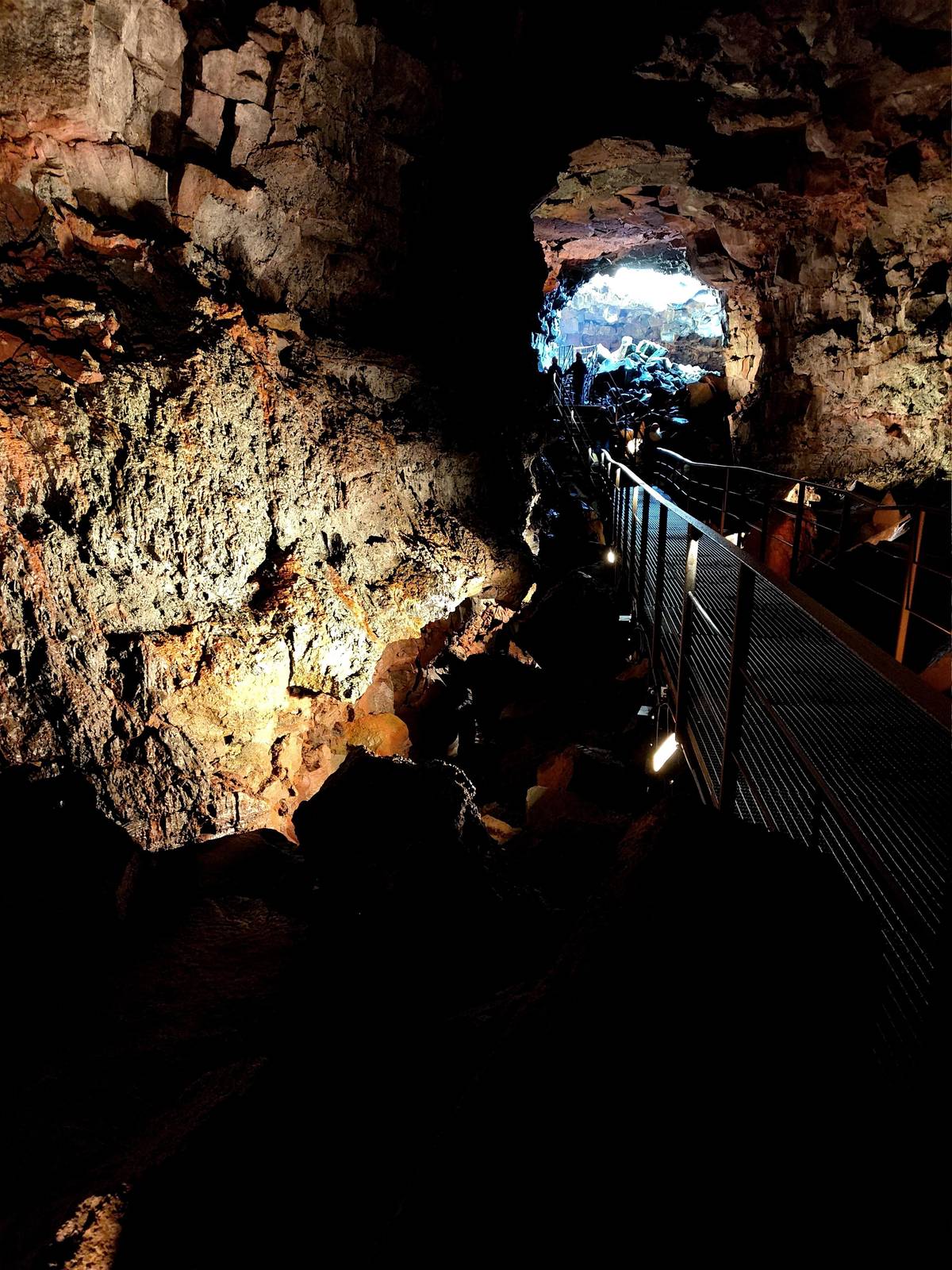
If you remember one thing about what to wear in a lava cave, make it this: the cave does not care what season it is. The operator of Raufarhólshellir gives the temperature inside as around 0 to 4 degrees Celsius and warns that water sometimes drips from the ceiling.1 That is the climate of a cold, damp cellar, and it is the same on a bright July afternoon as on a dark January morning.
The operator's own advice is short and sensible. Helmets and lights are provided; warm clothes and sturdy shoes are recommended; and because water usually drips from the ceiling, a water-resistant or waterproof jacket is a good idea.2 Add a hat that fits under the helmet and a pair of gloves, and you have everything the 1-hour walk asks of you.
Other caves are no warmer. At Vatnshellir on Snæfellsnes the operator says the temperature stays just above freezing year-round and recommends gloves.5 The Arnarker caving listing says its cave rarely goes above 4°C, even in summer, and a Víðgelmir tour puts that cave at approximately 4°C year-round. Wherever you go underground in Iceland, plan for a fridge.
Layering is the answer in a cave, just as it is outside. Visit South Iceland calls layering the key to dressing well in Iceland at any time of year, with wool close to the body and a wind- and waterproof outer shell.4 For a cave that means a thin wool or synthetic base layer, a warm mid-layer such as a fleece or a wool sweater, and a shell on top that keeps the drips off.
The reason layers work so well is that you can adjust them. In the car or on the bus you may be warm; standing still in the cave while the guide explains the rock, you cool down quickly. Open or close the jacket as you go. Avoid cotton next to your skin if you can: once damp, it stays cold, and a lava tube is a damp place even when the floor looks dry.
Think about your head and hands too. A thin beanie fits under the helmet and keeps a surprising amount of warmth in. Gloves help on cold metal railings and stairs, and at Vatnshellir both the operator and the Environment Agency of Iceland recommend them.56 If you run cold, a scarf or neck warmer takes up no space in a pocket and makes the hour noticeably more comfortable.
Month by month
| Month | Daylight (h) | Darkness (h) | High / low | Wet days | At the cave |
|---|---|---|---|---|---|
| Jan | 5.4 | 18.6 | 3 / -2 °C | 12 | daily tours |
| Feb | 8.6 | 15.4 | 3 / -2 °C | 13 | daily tours |
| Mar | 11.6 | 12.4 | 4 / -1 °C | 11 | daily tours |
| Apr | 14.9 | 9.1 | 7 / 1 °C | 8 | daily tours |
| May | 18.2 | 5.8 | 10 / 4 °C | 8 | daily tours |
| Jun | 20.8 | 3.2 | 13 / 7 °C | 6 | daily tours |
| Jul | 19.7 | 4.3 | 15 / 9 °C | 7 | daily tours |
| Aug | 16.5 | 7.5 | 14 / 9 °C | 9 | daily tours |
| Sep | 13.2 | 10.8 | 11 / 6 °C | 11 | daily tours |
| Oct | 10 | 14 | 8 / 3 °C | 10 | daily tours |
| Nov | 6.7 | 17.3 | 5 / 0 °C | 12 | daily tours |
| Dec | 4.4 | 19.6 | 3 / -2 °C | 12 | daily tours |
Highs, lows and wet days (2.5 mm or more) are NOAA averages for the Reykjavík city station, about 32 km from the cave, 1991 to 2020; mid-month daylight is our own calculation.7 Season according to the cave's operator.18
Three outfits
Light layersThe 1-hour footbridge walk
 Warm and grippy
Ice at the entrance
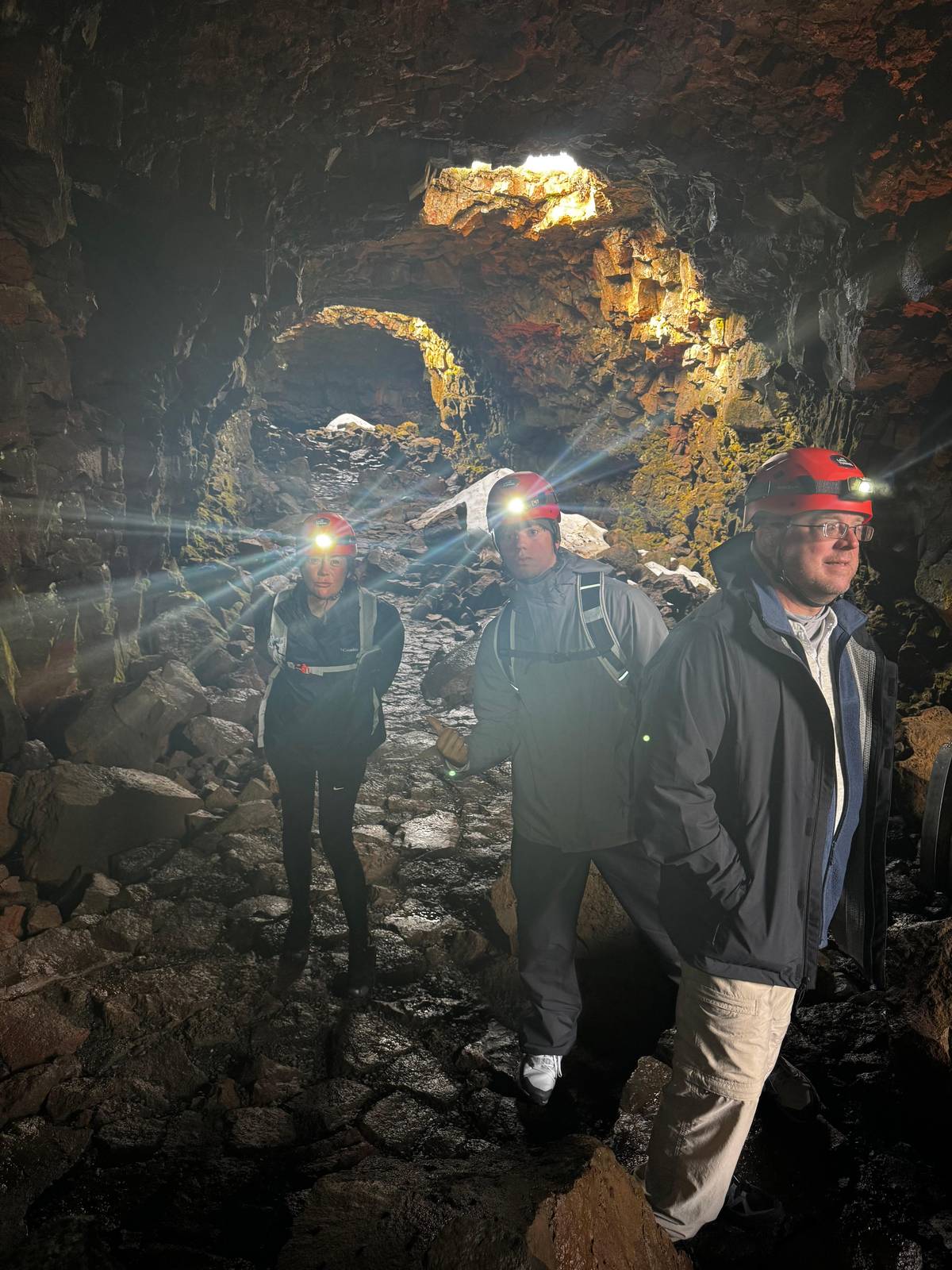 Built for rock
Lava falls or Arnarker
Decision helper
Find your situation and pack accordingly
Helmets and lights provided. Warm clothes and sturdy shoes are recommended and bear in mind that there is usually some water dripping from the ceiling so wearing a water resistant or water proof jacket/clothes is recommended.
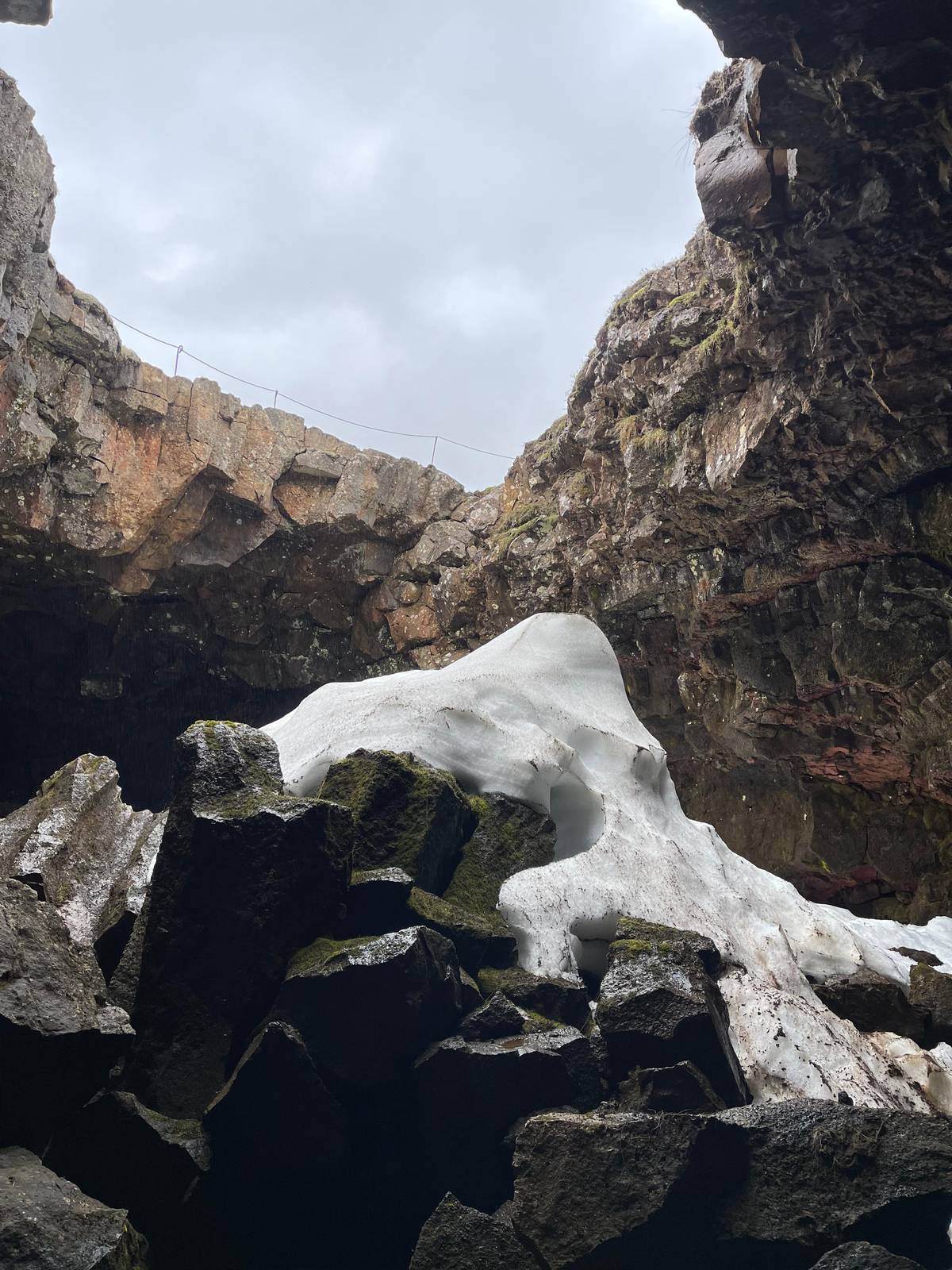
Footwear matters more than any other piece of clothing. Inside Raufarhólshellir much of the tunnel is covered in large rocks, and although a footbridge and paths cross the roughest terrain, there are steps, damp metal and, in winter, ice near the entrance.11 The operator recommends good hiking shoes for the standard walk.3 Trainers with a solid tread will do; smooth city soles will not.
On rougher trips the rules get stricter. For the Lava Falls Adventure Tour in Raufarhólshellir, hiking boots with ankle support are required, and the operator says sneakers or low-cut shoes are not allowed.39 The Arnarker listing also requires hiking boots with ankle support. At Vatnshellir high heels, flat-bottom shoes and flip-flops are not allowed for safety.5
Visit South Iceland puts waterproof and sturdy walking shoes with a good tread on its year-round packing list for Iceland, so the same pair can serve you in the cave and on the rest of your trip.12 Break them in before you arrive, wear thick socks, and if you travel in winter, remember that the operator's listing includes crampons for the cave.
Checklist
Calculator
Choose a cave and the number of people
Total from$144
each from $72
Check availabilityfree cancellationOur sum: the trip's cheapest GetYourGuide fare multiplied by how many cavers you enter, converted with the ECB's figure for the day. The exact amount shows once you pick a date.
Video
Nothing from YouTube loads into the page until you press the play button.
Water is the part visitors forget. In Raufarhólshellir water usually drips from the ceiling, and the operator recommends a water-resistant or waterproof jacket for that reason.2 The Leiðarendi caving listing likewise asks you to wear a waterproof jacket in the cave, and the Arnarker listing recommends one too. A light rain shell over your warm layer solves the problem.
You do not need to bring a helmet or a light for the walk sold on this site: the listing includes helmets and headlamps, and crampons in winter. Leave your own headlamp in your bag at Vatnshellir, where helmets and flashlights are provided and, for safety reasons, headlamps are not permitted.10 On the caving trips, check each listing for what it provides and what it expects you to bring.
Keep your hands free. A small backpack or a jacket with deep pockets is better than a handbag, because you may want a hand on a railing or on the rock. Put your phone or camera on a wrist strap, and wipe the lens before photos, since drips and cold air can mist it. A spare pair of dry gloves in a pocket is a small luxury in winter.
The outside weather decides what you wear to and from the cave. At the Reykjavík weather station, the city's own and not the cave's, daily highs average 14.9 °C in July and 3.2 °C in January.7 The table on this page gives every month, with the highs, the lows and the number of wet days, so you can see how little the warm season really differs from the cold one.
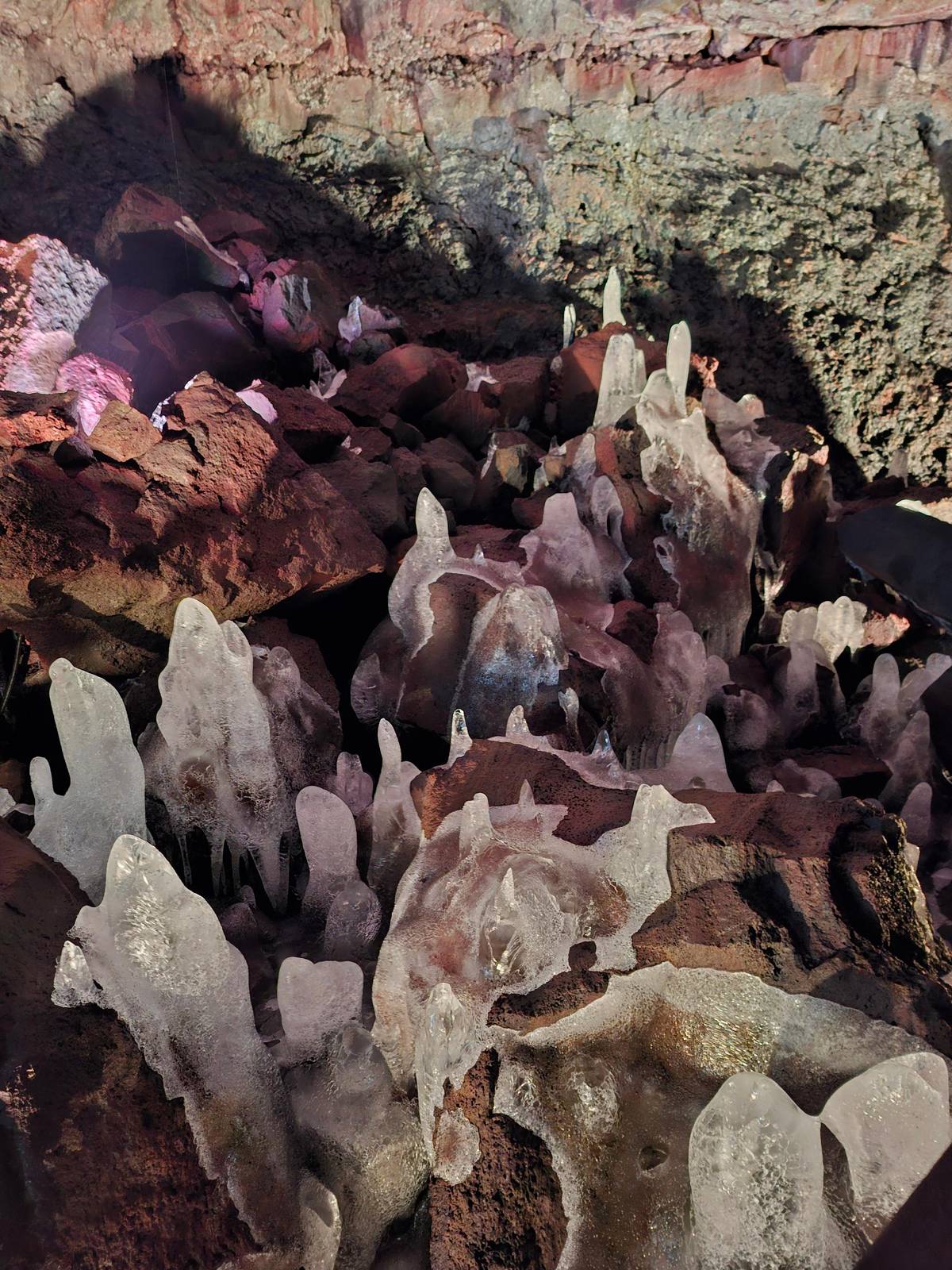
Winter adds ice. Visit South Iceland recommends an insulated jacket in winter along with ice cleats, ice grips or anti-slip soles for better traction.8 The parking area and the path to the entrance can be slippery when frozen, and the operator says ice sculptures form inside the entrance of the cave every winter.13 The crampons included in the listing cover the cave itself.
Summer is milder but not warm. Visit South Iceland reminds visitors that Icelandic summers are cool rather than hot, with evenings that can feel quite cold, and to be prepared for quickly changing conditions in every season.1415 A day that starts sunny in Reykjavík can be windy and wet on the heath by the cave. Bring the same layers in July as in October, and simply wear fewer of them in the car.
The rough caving trips ask for more. The Lava Falls Adventure Tour in Raufarhólshellir requires hiking boots with ankle support and warm clothes, provides helmets, headlights and, in winter, crampons, and spends 3 to 4 hours underground on average.16 Over that time the cold adds up, so an extra mid-layer is worth more than you think.
For Arnarker the listing asks for good physical shape and balance, hiking boots with ankle support and a waterproof jacket, and warns the cave rarely goes above 4°C even in summer. Visit South Iceland adds that exploring Arnarker needs good hiking gear, a helmet and a headtorch.17 Choose trousers that move well and that you do not mind scuffing on sharp lava, and gloves with grip.
On every caving trip, the rule is the same: nothing loose, nothing precious, nothing that hampers your hands. Leave jewelry at the hotel, tie long hair back under the helmet, and carry water and a small snack in a backpack. Lava rock is sharp and unforgiving, and the less you have to think about your clothes, the more you can enjoy the cave.
Under the lava
Pick a slot, park at the cave on road 39 and step underground with a guide.
Close to freezing. Raufarhólshellir is around 0 to 4 °C, and Vatnshellir stays just above freezing all year.15
Yes, it helps. Water usually drips from the ceiling in Raufarhólshellir.2
Hiking shoes or sturdy trainers. The operator recommends good hiking shoes; ankle boots are required for the lava falls trip.3
No. The listing includes a helmet and headlamp, and crampons in winter.
Not really. The Arnarker listing says its cave rarely goes above 4°C, even in summer.
No. The operator says sneakers or low-cut shoes are not allowed.9
An insulated jacket and grips. Visit South Iceland recommends ice cleats, ice grips or anti-slip soles.8
Sources